




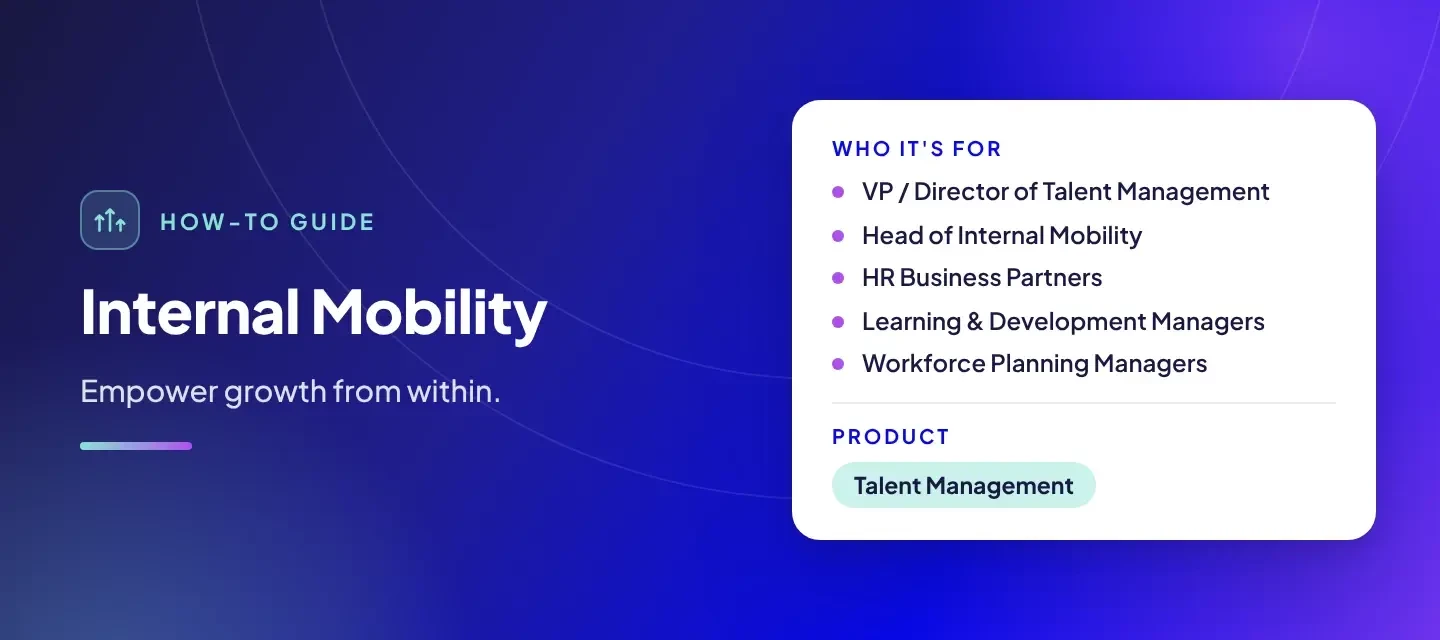
Internal mobility—the movement of employees within an organization—plays a critical role in talent retention, career development, and organizational agility. Organizations that invest in internal mobility improve employee engagement, reduce hiring costs, and build a resilient workforce prepared for the future.
The business impact of internal mobility
- Improved retention: Employees with growth opportunities are more likely to stay.
- Cost savings: Filling roles internally reduces external hiring and onboarding expenses.
- Enhanced workforce agility: Quickly redeploy talent to meet shifting business needs.
- Stronger employee engagement: Career progression boosts morale and productivity.
Challenges in implementing internal mobility
Despite its benefits, organizations often struggle with:
- Lack of visibility into internal talent: Managers may not be aware of existing employees' skills.
- Limited career development programs: Employees need clear pathways for growth.
- Cultural resistance to change: Leaders may hesitate to move talent across teams.
- Bias in promotion decisions: Subjective evaluations can limit mobility opportunities.
Strategies for effective internal mobility
1. Implement AI-powered talent insights
- Identify employees with transferable skills for open roles.
- Match employees to career opportunities based on capabilities and potential.
- Use AI to predict future career paths and skill development needs.
2. Foster a culture of career growth
- Encourage employees to explore internal opportunities through career portals.
- Provide mentorship and coaching to support career transitions.
- Promote internal job postings and make career mobility a leadership priority.
3. Enable upskilling and reskilling programs
- Offer personalized learning and development plans.
- Align training programs with future business needs.
- Support employees in acquiring new certifications and credentials.
4. Streamline the internal hiring process
- Simplify internal application processes and remove barriers.
- Use AI-driven recommendations to connect employees with relevant roles.
- Ensure fair and transparent selection criteria for internal candidates.
5. Leverage data to measure internal mobility success
- Track internal movement rates, promotion success, and retention metrics.
- Analyze skill gaps and workforce trends to inform mobility strategies.
- Use AI-powered analytics to optimize career progression programs.
How Eightfold can help
AI-powered solutions for internal mobility
- Skill-based matching: Identify and recommend career paths based on existing skills.
- Career hub: Empower employees with personalized career development insights.
- Automated learning recommendations: Suggest training programs aligned with career goals.
- Workforce planning insights: Predict future talent needs and proactively develop internal talent.
Want to learn more about internal mobility?
Reach out to your Customer Success Manager or start a discussion right here in the community!